
Rush County Arrest Records and Charges
Rush County arrest records are not the same as the court charge record. The arrest side starts with the agency that made or processed the arrest, such as the Rush County Sheriff's Office, Rushville Police Department, Indiana State Police, or another law-enforcement agency. Booking and custody questions route to the sheriff or jail. The court charge record starts when the Rush County Prosecutor files a criminal or infraction case with the clerk and the case appears in the Rush Circuit or Superior court system if public.
The Rush County Sheriff's Office is at 131 East First Street, Rushville, Indiana 46173. Sheriff Allan Rice is listed by Rush County, and the office phone is 765-932-2931. The phone directory lists a separate Rush County Jail line at 765-938-5245. The sheriff page names jail and correction staff, but it does not publish a conventional public mugshot or booking database. Current custody should be checked with the sheriff or jail instead of assuming a statewide jail site includes Rush County.
The official sheriff source confirms the local law-enforcement custodian for arrest and custody questions.

That local sheriff channel is the starting point for custody questions, while filed charges belong to the court record.
Rush County Arrest Record Channels
Rush County arrest information can move through more than one office. City police may make or document a city arrest. The sheriff may hold a person in jail, process warrants, or answer custody questions. The prosecutor reviews law-enforcement referrals and decides what formal charges to file. The clerk keeps the court case once charges are filed. MyCase is the public court-search route, not a jail roster, and it should not be treated as a complete criminal-history product.
| Channel | Use for | Rush County detail |
|---|---|---|
| Sheriff and Jail | Arrest custody, booking, release, warrant surrender logistics | 131 E First St, 765-932-2931; jail line 765-938-5245 |
| Rushville Police | City police arrests, reports, city incidents | 270 W 15th St, 765-932-3907 |
| Prosecutor | Formal charges, diversion, infractions, prosecution | Room 317, 765-932-2000 |
| Clerk and MyCase | Filed charge list, case status, bonds, warrants, hearings, outcomes | Room 209, 765-932-2086; MyCase public search |
| Indiana State Police | Limited criminal history, NIBRS, state police referral | Not a Rush County court charge database |
The Rushville Police Department source identifies Chief Craig Tucker, the department address, emergency and non-emergency contact points, and city programs.
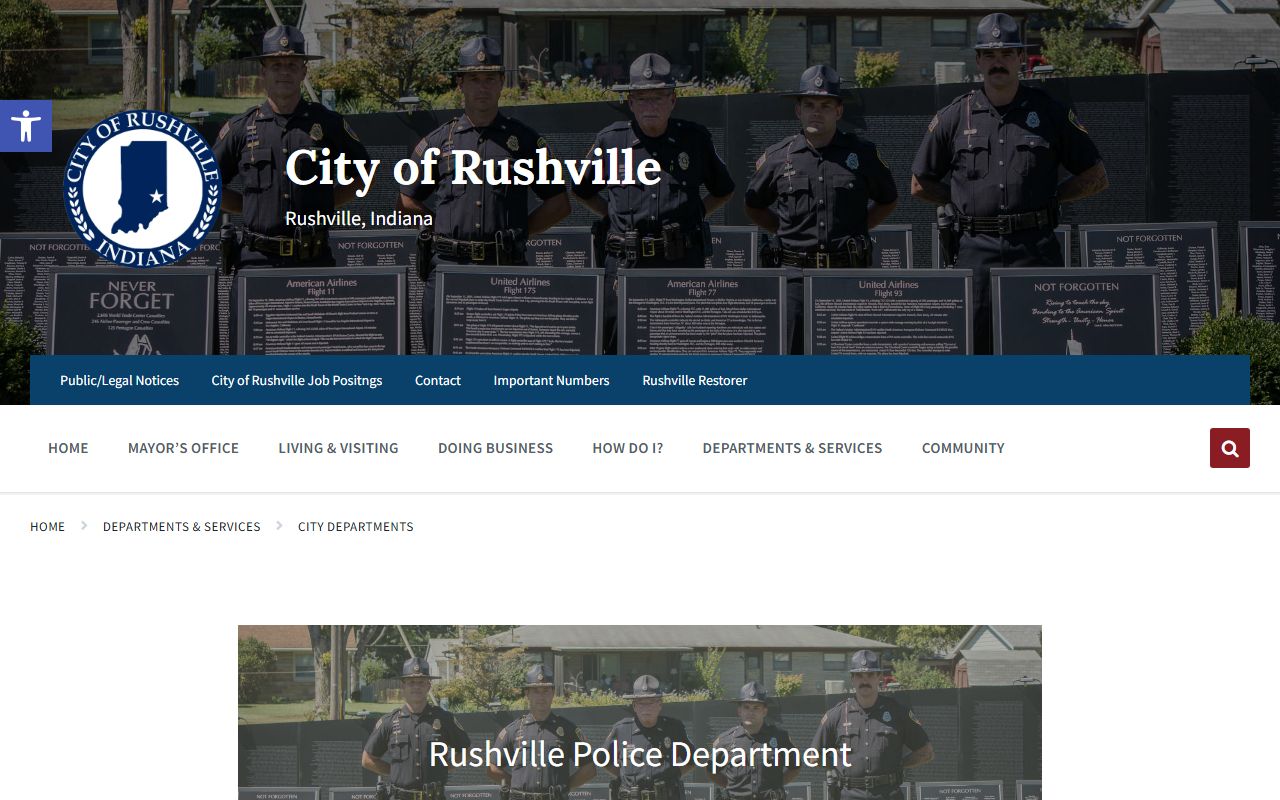
City police records can explain an arrest event, but the prosecutor-filed charge is verified through the court case.
Find Rush County Arrest Charges
Court charges after arrest are searched in MyCase after the prosecutor files the case. Search by case number when known, or by defendant last name with a first name, middle name, or date of birth qualifier. MyCase may also be searched by citation number for infraction matters. The Rush County Clerk page warns that not all cases may be found online because of age or public-record status. If a charge is missing, older, sealed, or not linked, the clerk is the official copy and verification route.
- Start with the law-enforcement agency if the question is custody, booking, release, or the arrest report.
- Search MyCase by defendant name, case number, or citation number to find filed charges after arrest.
- Open the case and read each charge count, statute, level, bond, warrant, hearing, and status entry.
- Check the chronological case summary for amendments, reductions, dismissals, plea entries, and sentencing.
- Contact the clerk for certified copies or non-linked public documents.
The City of Rushville important phone numbers source adds local fallback contacts for sheriff dispatch, prosecutor, probation, victim assistance, and related services.
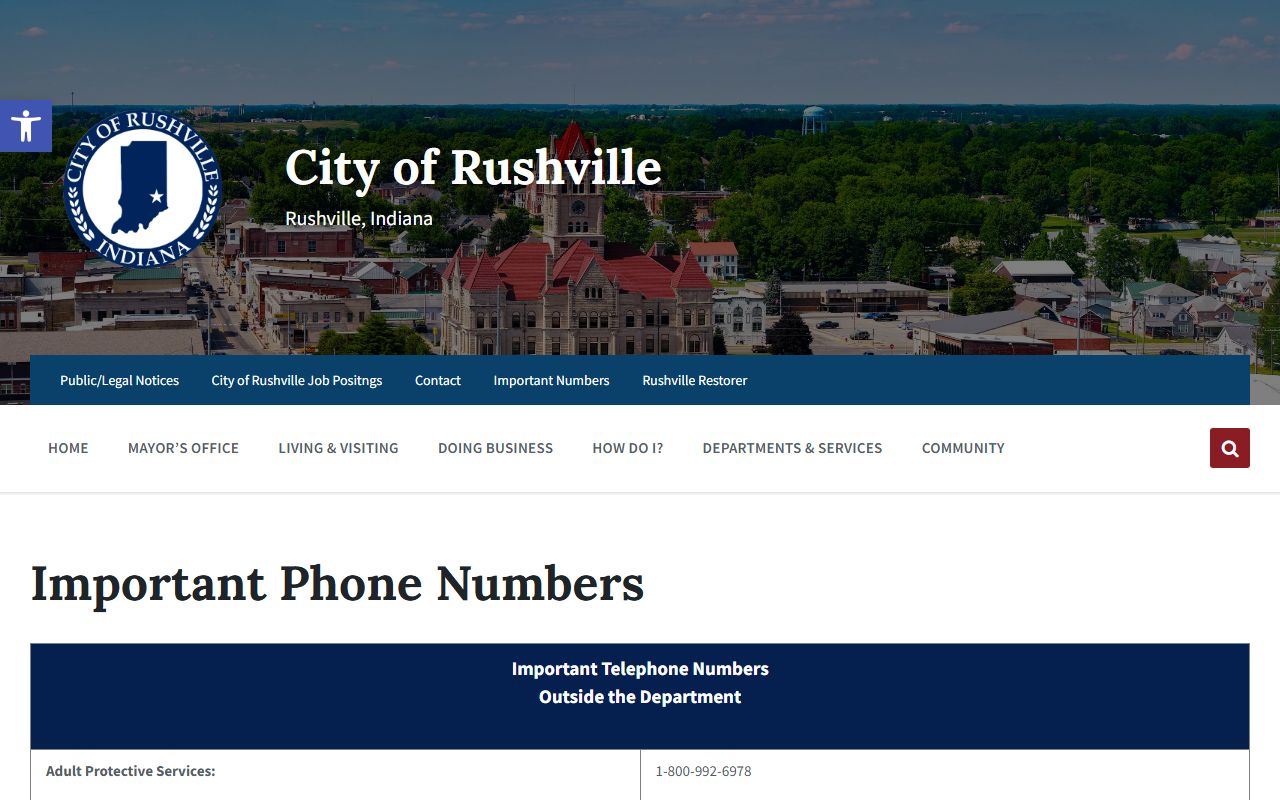
Those local numbers help separate arrest, prosecution, probation, and victim-assistance questions instead of routing all questions to one office.
Rush County Charge Documents
A charging document is the filing that turns an arrest referral or citation into a court charge record. Indiana counties use prosecutors, not district attorneys, and the Rush County Prosecutor's Criminal Division prosecutes all criminal felony, misdemeanor, juvenile, and infraction cases in Rush County. The document may list the offense description, statute, level, facts alleged, prosecutor signature, and filing court. It is the starting point for the court charge record, but it is not a conviction.
| Document type | Who files or initiates it | What it does in Rush County |
|---|---|---|
| Complaint | Law enforcement and prosecutor process | States alleged offense facts and may support probable cause or initial filing. |
| Information | Prosecutor | Formal prosecutor-filed charge used in many Indiana criminal cases. |
| Indictment | Grand jury process | Less common local path for serious matters when grand-jury charging is used. |
After filing, related court entries can include an initial hearing, bond order, arrest warrant, transport order, bondsman ordered-to-produce notice, release form, or bond forfeiture. The clerk processes those criminal documents, while the sheriff handles execution and custody. This is why Rush County arrest records and filed charge records often need both sheriff and court context.
Rush County Charge Status Terms
A charge may change after the first MyCase result appears. Prosecutors can amend or reduce counts, the court can dismiss counts, plea agreements can resolve some counts while dismissing others, and an acquittal can appear after trial. Read every count separately and compare the charge list to the final disposition and sentencing order. A single arrest can produce several charges with different outcomes.
| Status | What it means |
|---|---|
| Pending | The charge has been filed and no final outcome appears for that count. |
| Amended | The prosecutor or court changed the filed charge, wording, level, or count details. |
| Reduced | The charge moved to a lower offense level or different count as part of case action. |
| Dismissed | The count was ended without conviction, either by court order or prosecutor action. |
| Convicted | A guilty plea, verdict, or judgment established guilt on that count. |
| Deferred or diverted | Eligible program terms may lead to dismissal after completion. |
Rush County Charge Fields
MyCase charge information is part of the larger court case file. The search form can use a case number, citation number, cross-reference number, party name, attorney fields, court, case type, status, and filing-date range. In the case detail, the useful charge fields are the cause number, court, case status, defendant, charge description, statute or code, level, prosecutor filings, bond or warrant entries, hearings, disposition, sentence, financial balances, and document links when public.
| Field | Use in a Rush charge lookup |
|---|---|
| Case or cause number | Best way to reach the exact filed case and avoid same-name matches. |
| Citation number or UTT | Useful for infractions and traffic-related charges after a citation. |
| Defendant name | Common starting point, narrowed by first name, middle name, DOB, court, status, or date. |
| Charge description and statute | Shows the accusation filed by the prosecutor, not proof of guilt. |
| Bond or warrant entries | Shows related custody conditions, arrest warrant, bond change, release, or forfeiture context. |
| Disposition | Shows conviction, dismissal, acquittal, diversion result, or other final action if entered. |
Rush Charge vs Conviction
Rush County arrest records and charges should not be read as a conviction record unless the court record shows a conviction. An arrest can lead to no filing, one filed charge, several filed charges, dismissal, amendment, diversion, plea, trial, or sentencing. The safest reading is chronological: arrest or citation, prosecutor filing, court status, charge-level disposition, and final sentencing if there is a conviction.
| Point | Charge | Conviction |
|---|---|---|
| Meaning | Accusation filed after law-enforcement referral or citation. | Final court outcome establishing guilt on a count. |
| Appears in | Complaint, information, charge list, initial hearing, bond or warrant entries. | Disposition, judgment, sentencing order, probation, costs, restitution. |
| Can be public? | Often public unless restricted, sealed, juvenile, or confidential. | Often public unless restricted, sealed, expunged, juvenile, or confidential. |
| Common mistake | Treating the first filed charge as the final result. | Ignoring which count produced the sentence or financial order. |
Restricted Rush Arrest Records
Public access has limits. Juvenile law-enforcement and court records are confidential except where Indiana law allows access. Protection-order identifying information, adoption records, many mental-health and medical records, personal identifiers, sealed records, and expunged records are also restricted. MyCase may show an expungement matter while pending or denied, but once granted, the underlying case may be removed from public access depending on the order and Indiana expungement law.
The Indiana State Police NIBRS Rush County source identifies Sheriff Allan Rice and the county sheriff address for state reporting context, but it is not a public booking or mugshot database.
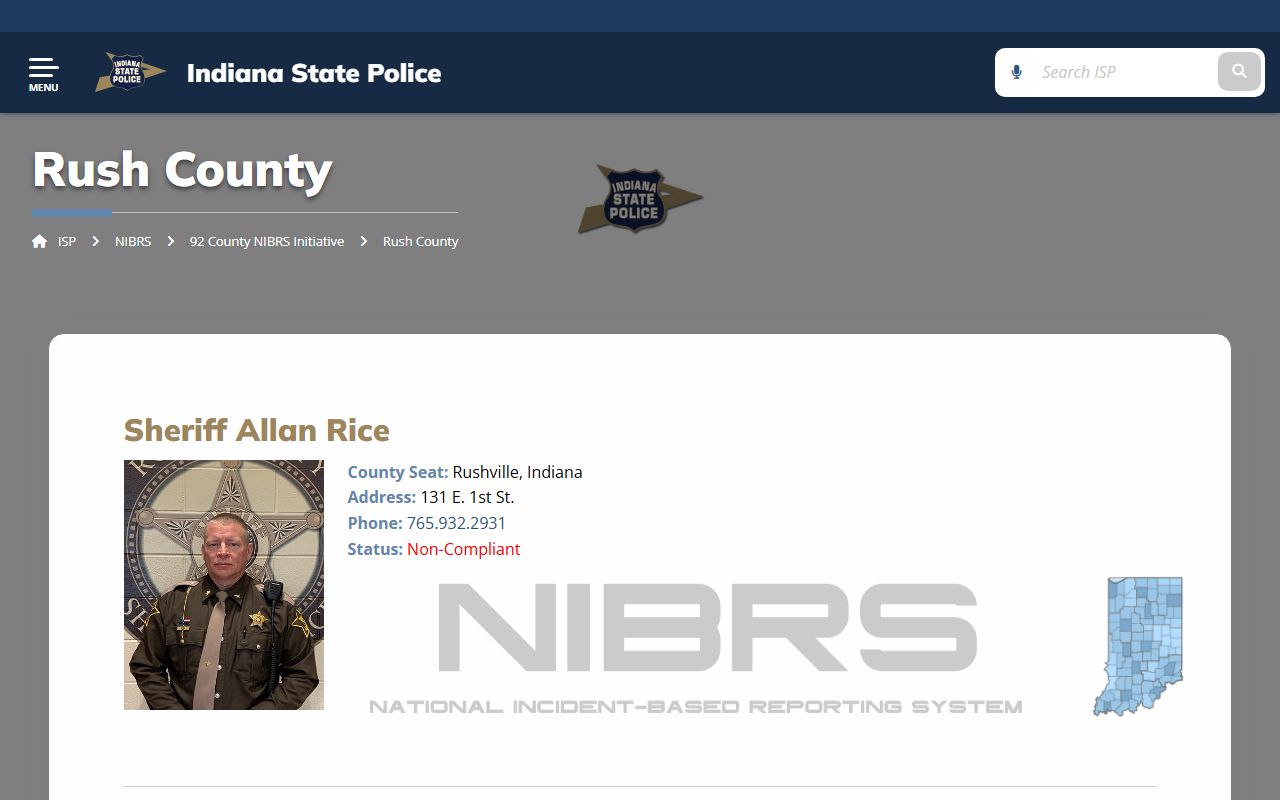
State police reporting pages can verify agency context, but filed court charges still need MyCase or clerk verification.
Federal Rush Charge Records
Federal charges tied to Rush County residents are separate from Rush County court charges. The U.S. District Court for the Southern District of Indiana serves Rush County through the Indianapolis division, and federal electronic filings use PACER and CM/ECF. Federal criminal cases, civil-rights cases, habeas matters, and federal-question cases are not searched through Rush County MyCase unless a related state case also exists.
The PACER court lookup for the Indiana Southern District provides the federal court identifier and contact route.
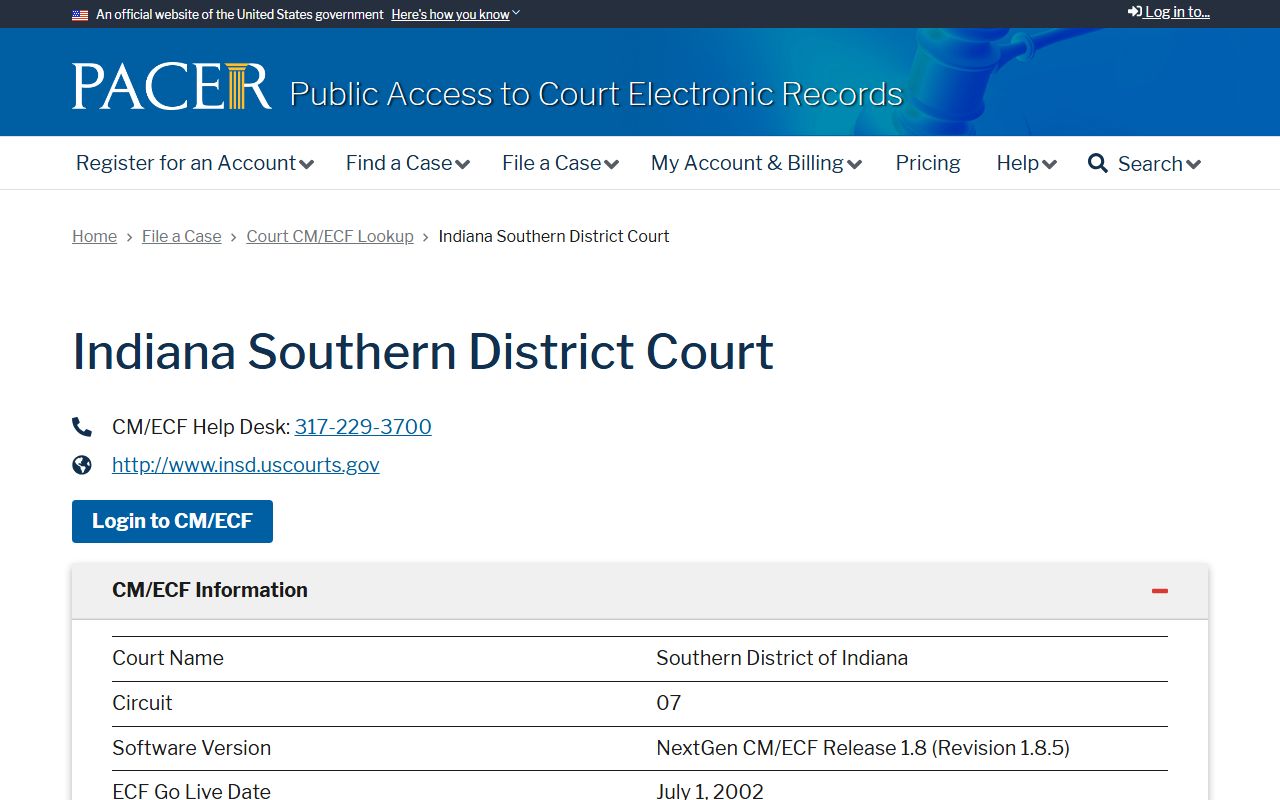
PACER is the federal access route, so it should not be mixed with county arrest or Rush prosecutor records.
The Southern District of Indiana CM/ECF source is the live federal filing system for that court.
Federal charge records use different logins, courts, and document rules than Rush County criminal court charges.
Diversion and Financial Records
The prosecutor's Pre-Trial Diversion Program can apply to eligible misdemeanor defendants with little or no criminal history, not felonies. Successful completion after one year can lead to dismissal. Rush traffic and infraction deferral is separate: eligible Rush County tickets require a 12-month agreement, a total listed cost of $192.50, and no payment of the ticket first. Once a ticket is paid through court, the prosecutor states it is sent to the BMV and cannot be reversed through the deferral process.
Financial entries can include court costs, fines, restitution, criminal costs, deferral costs, public-defender fees, and credits. Rush PayGov has separate links for restitution and criminal court costs and fines, but PayGov payments require a cause number and do not prove that a warrant, bond, charge, or conviction has been cleared. For official balances and certified copies, contact the clerk.
Note: A dismissed or diverted charge can still appear historically unless a sealing or expungement order changes public access.
Public Record Search
Sponsored Results